
The Hidden Chemistry of a Healthy Reef
Trace Element Reference Guide
Understanding the East Coast Corals Trace Element Range
The Elements
Metalloid
Metalloid
Why Trace Elements Matter
Natural seawater carries dozens of elements at vanishingly small concentrations. Most go unnoticed in the average reef tank — until they run out. Trace elements sit quietly behind calcification, photosynthesis, pigmentation, enzyme function and the cellular processes that keep a reef alive and colouring up.
Quick Introduction: Zooxthanellae
Most of the biology in this guide stems from a single relationship between a coral and its symbiont: Zooxthanellae. Corals don't photosynthesise on their own, they host millions of microscopic algae, commonly called zooxanthellae. The algae, present within the coral tissue, photosynthesise and hand most of that energy over to the coral; the coral, in return, gives the algae shelter and a steady supply of nutrients. Neither does especially well without the other.
A huge share of what trace elements actually do in a reef tank comes down to feeding one half or the other of this partnership, i.e. powering the algae's photosynthesis, or supporting the coral's side of the exchange. Keep this relationship in mind through the rest of the guide; it's the thread that ties almost every element back together.
A Deeper Dive: The Genera Behind "Zooxanthellae"
"Zooxanthellae" is actually shorthand for a whole family of algae, not one single organism. Until 2018, scientists lumped every coral symbiont into one genus, Symbiodinium, loosely split into "clades" — Clade A, B, C, D and so on. A major taxonomic revision that year found the genetic differences between these clades were large enough that they're really separate genera, not just varieties of one [11].
The family as a whole is now called Symbiodiniaceae, and it includes several distinct genera — Symbiodinium (formerly Clade A), Breviolum (formerly Clade B), Cladocopium (formerly Clade C, and the most common genus on Indo-Pacific reefs), and Durusdinium (formerly Clade D, notably heat-tolerant and often the genus that becomes dominant in corals that have survived a bleaching event).
This isn't just taxonomic housekeeping, different genera handle heat and light differently, and a coral's ability to shift its symbiont mix toward more heat-tolerant genera ("symbiont shuffling") is one of the more promising areas of coral resilience research. When this guide says zooxanthellae, it's talking about the family as a whole, not any one genus specifically.
Where These Levels Actually Come From
In the ocean, trace elements aren't topped up on a steady drip. They arrive in pulses; rainfall and river discharge wash terrestrial elements into coastal water, upwelling brings deep water rich in others to the surface, and storm events can shift concentrations noticeably within days.
A reef near a river mouth will experience different, more variable, trace chemistry than open ocean water.
This matters for dosing: nature's own delivery system isn't constant, it's episodic, which is part of why the manganese research covered later in this guide found pulse-dosing (a burst every second day) worked as well as a constant daily dose. For at least some elements, mimicking nature's rhythm may work as well as smoothing it out.
01
02
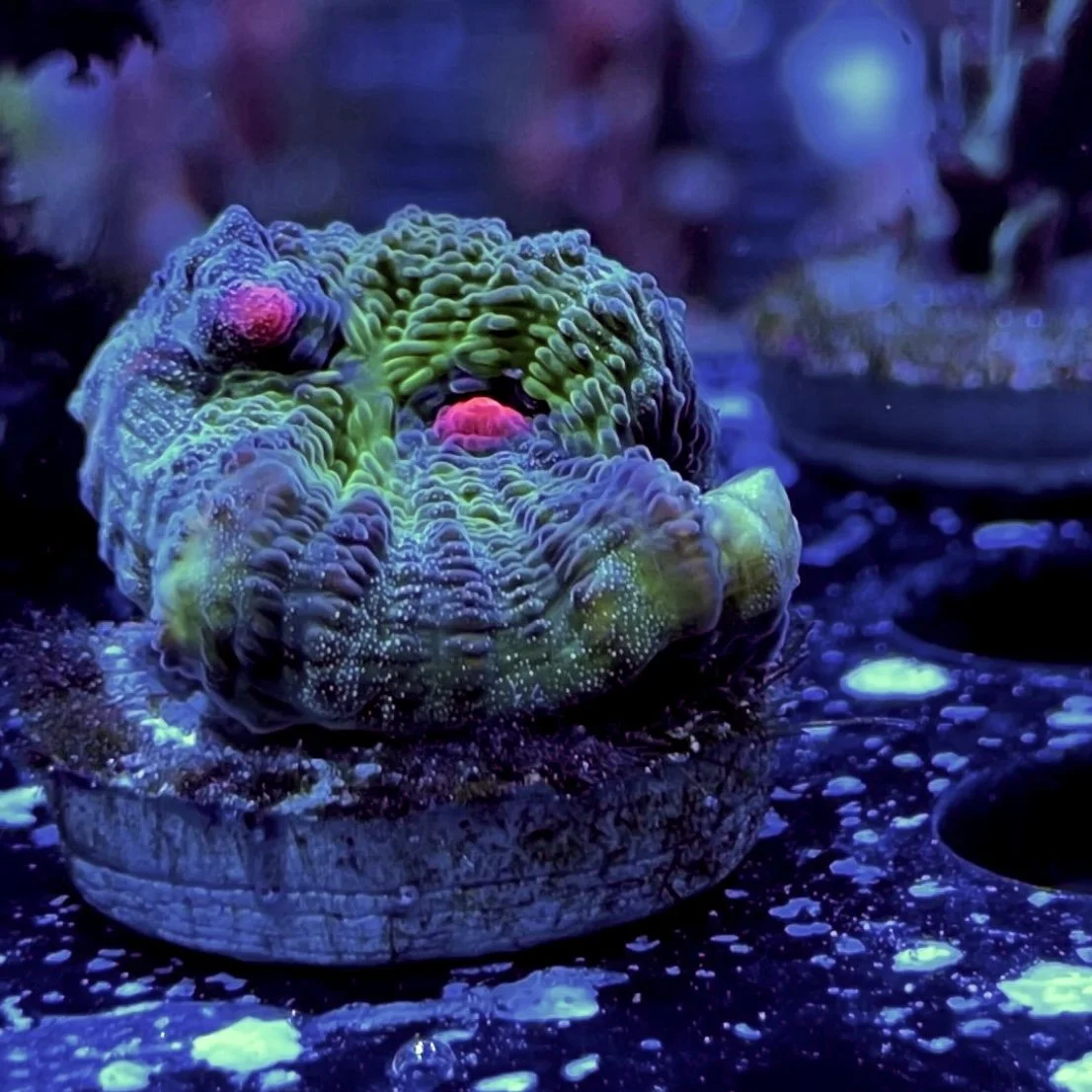
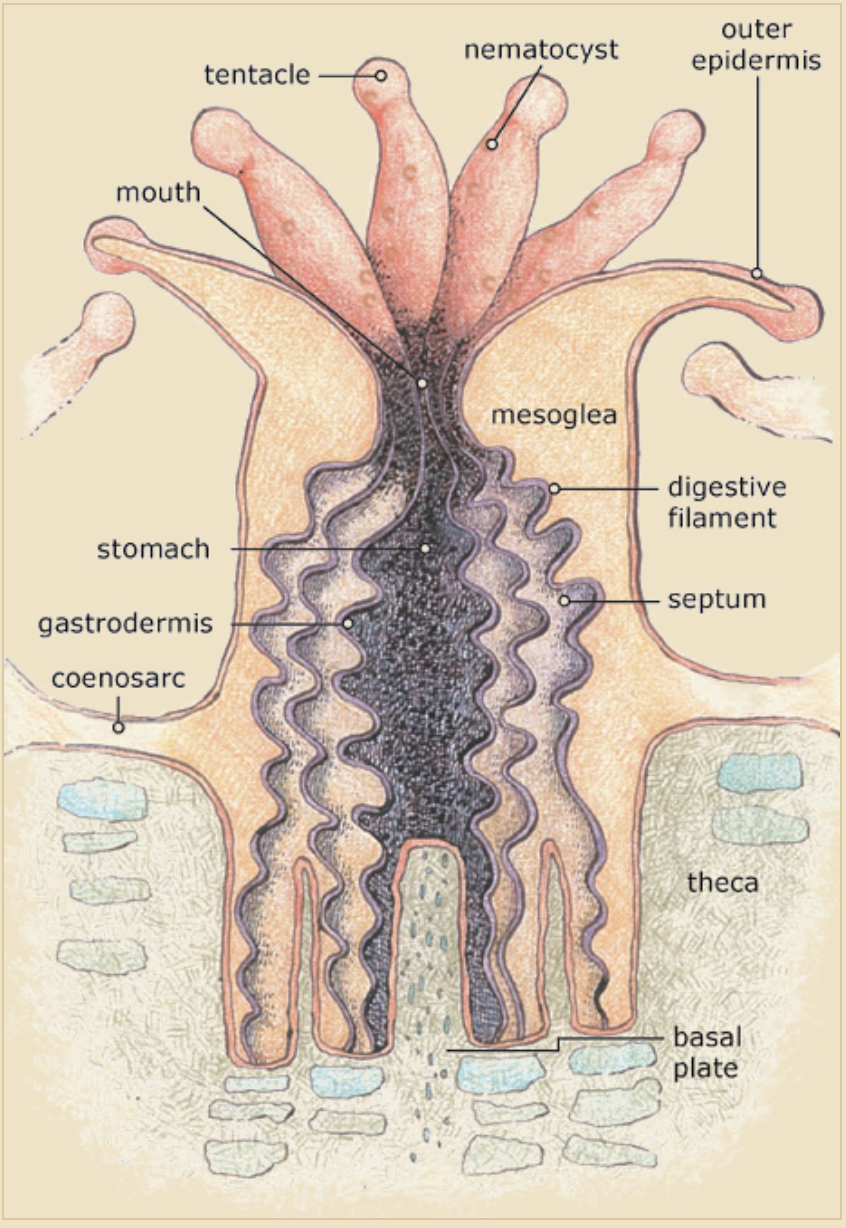
Source: NOAA Coral Reef Conservation Program
Boron
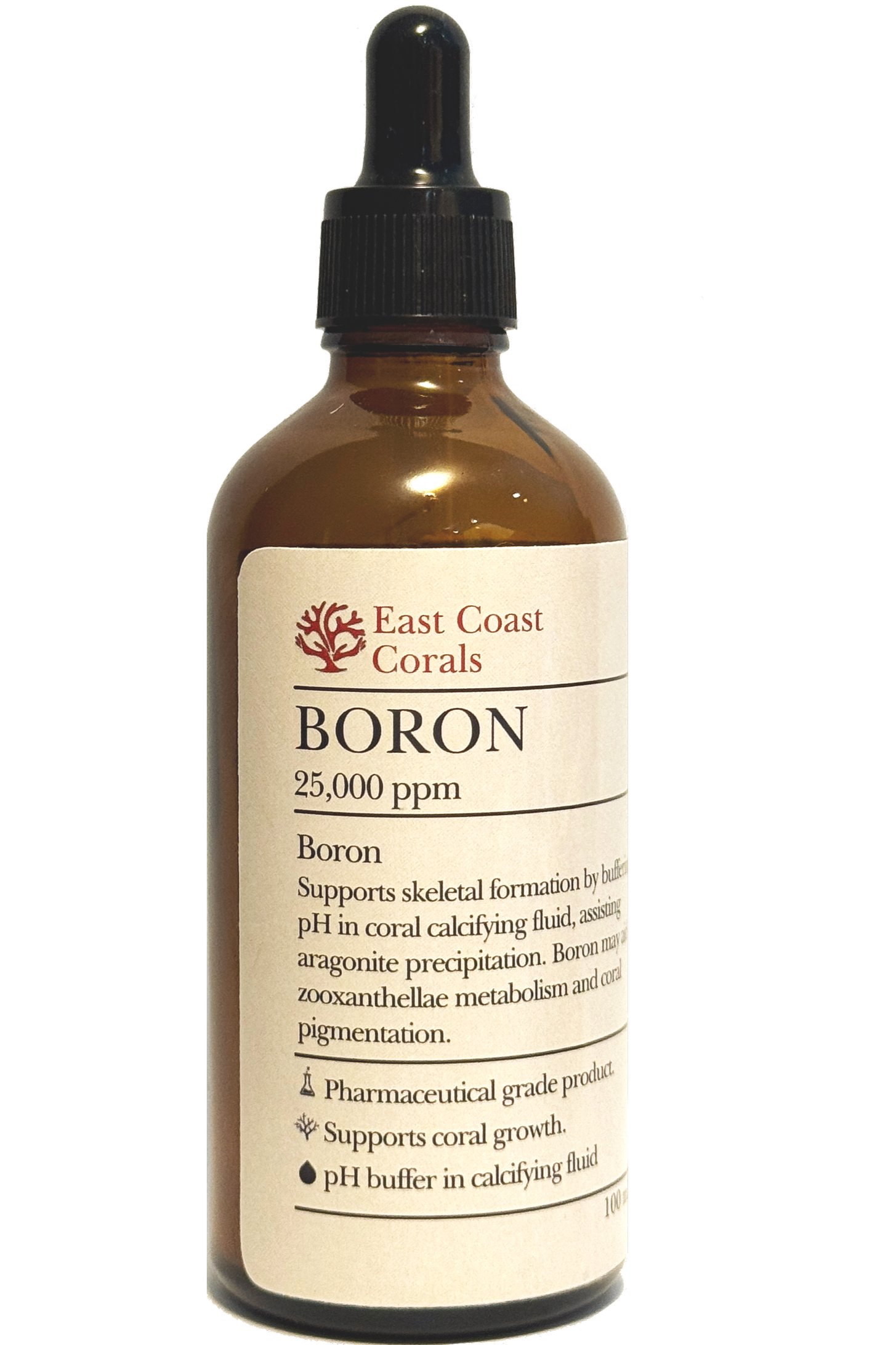
Coral builds its skeleton inside a thin pocket of fluid, tucked between the living tissue and the hard skeleton underneath. To turn that fluid into solid aragonite, the coral actively makes it less acidic than the seawater outside.[1] Boron gets swept up in that same process and built into the skeleton alongside calcium — it's considered a core part of the toolkit for steady, healthy growth.
Skeleton-building fluid chemistry
Built into the aragonite skeleton
Core growth element
Also known for: Scientists can read a coral's boron chemistry to work out how well it was managing its internal pH years or decades ago — a kind of chemical diary.
Boron
Coral builds its skeleton inside a thin pocket of fluid, tucked between the living tissue and the hard skeleton underneath. To turn that fluid into solid aragonite, the coral actively makes it less acidic than the seawater outside.[1] Boron gets swept up in that same process and built into the skeleton alongside calcium — it's considered a core part of the toolkit for steady, healthy growth.
Skeleton-building fluid chemistry
Built into the aragonite skeleton
Core growth element
Also known for: Scientists can read a coral's boron chemistry to work out how well it was managing its internal pH years or decades ago — a kind of chemical diary.
Element Symbol